What it is
My own product, built to find freelance and agency work. It covers the whole path: find a business, decide if it is worth the time, reach it, and learn from what happened.
What it does
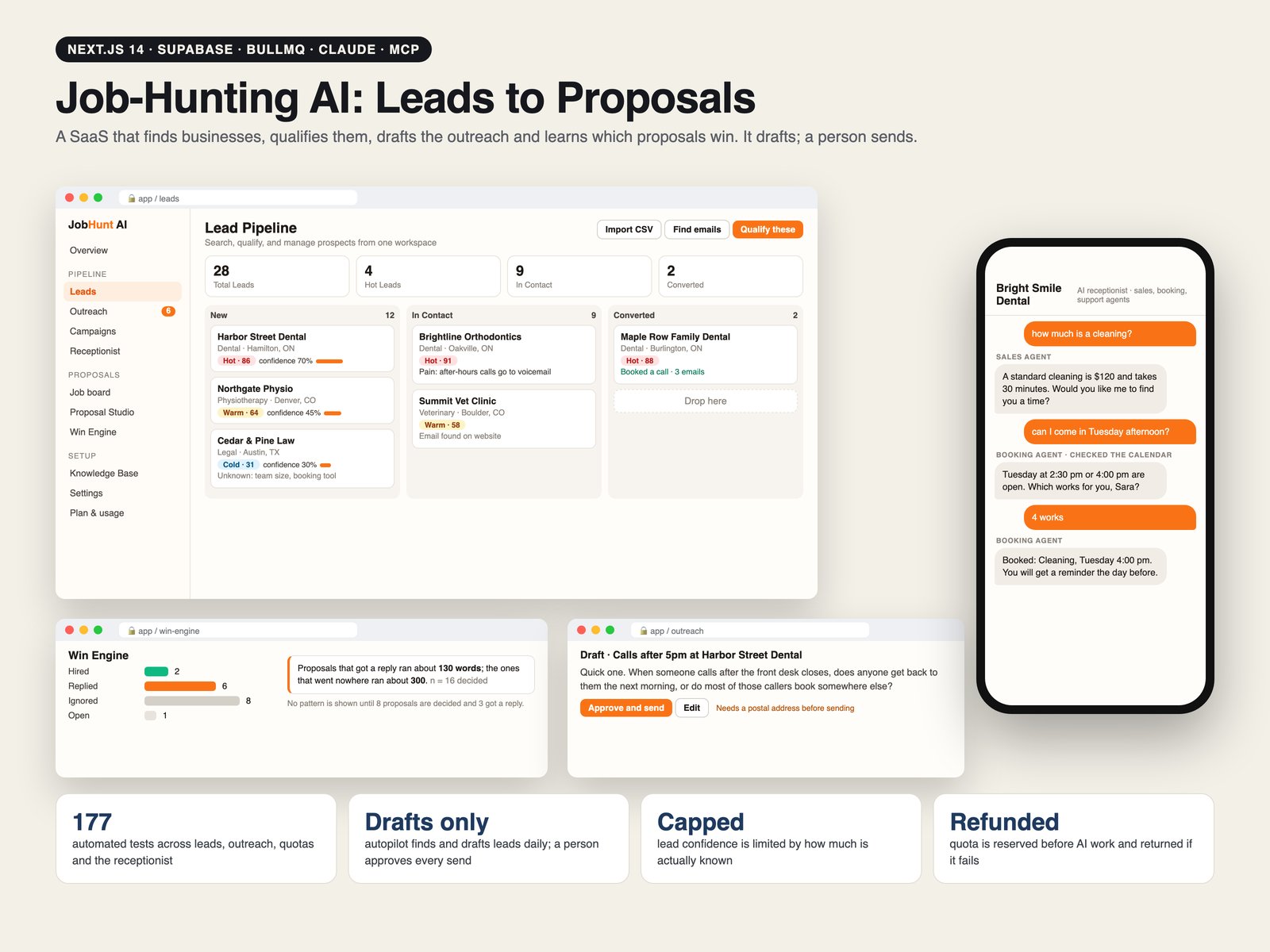
- Lead engine. Searches OpenStreetMap against a saved ideal-customer profile, imports CSV with a preview that says why a bad row was refused, and reads each business's own website for a published email.
- Qualification. An LLM scores fit, gives reasons, a pain guess and an opening line. Confidence is capped by how much is actually known, and the missing fields are listed.
- Outreach and autopilot. A daily run finds and enriches new leads, drafts emails and pushes a summary to the phone. Nothing is sent until a person approves it, and approval is refused until a postal address is set. Every email has an unsubscribe link.
- AI receptionist. Sales, booking and support agents, each with its own short prompt and tools, handing a caller across without asking their name twice. It is also exposed as an MCP server and an embeddable widget.
- Win Engine. Records proposal outcomes and shows what the winners had in common, for example reply-getting proposals were far shorter. It shows nothing until there are enough decided proposals to mean something.
- Plans and usage. Quota is reserved before AI work runs and refunded if the work fails, so two requests cannot both spend the last unit.
Stack
Next.js 14 and TypeScript, Supabase (Postgres, Auth, row-level security), BullMQ workers on Redis, Stripe billing, a Chrome extension for collecting job posts, and a provider-agnostic LLM layer (Claude, OpenAI, Gemini and others). 177 automated tests.
What it does not claim
Contact lookup only finds published addresses, roughly one site in four. Scores are a model's opinion against the profile. The receptionist books into the app's own calendar; phone lines and Google Calendar are integrations, not part of the demo.