The Brief
Three separate pieces of Laravel and PHP work, each with a different shape. A healthcare startup needed the backend for two mobile apps, one for doctors and one for patients. A client I had already done six media-processing contracts for wanted their Laravel application deployed and extended on AWS. And a German firm needed enterprise PHP that talks to SAP, where a wrong integration has a contractual cost.
What I Delivered
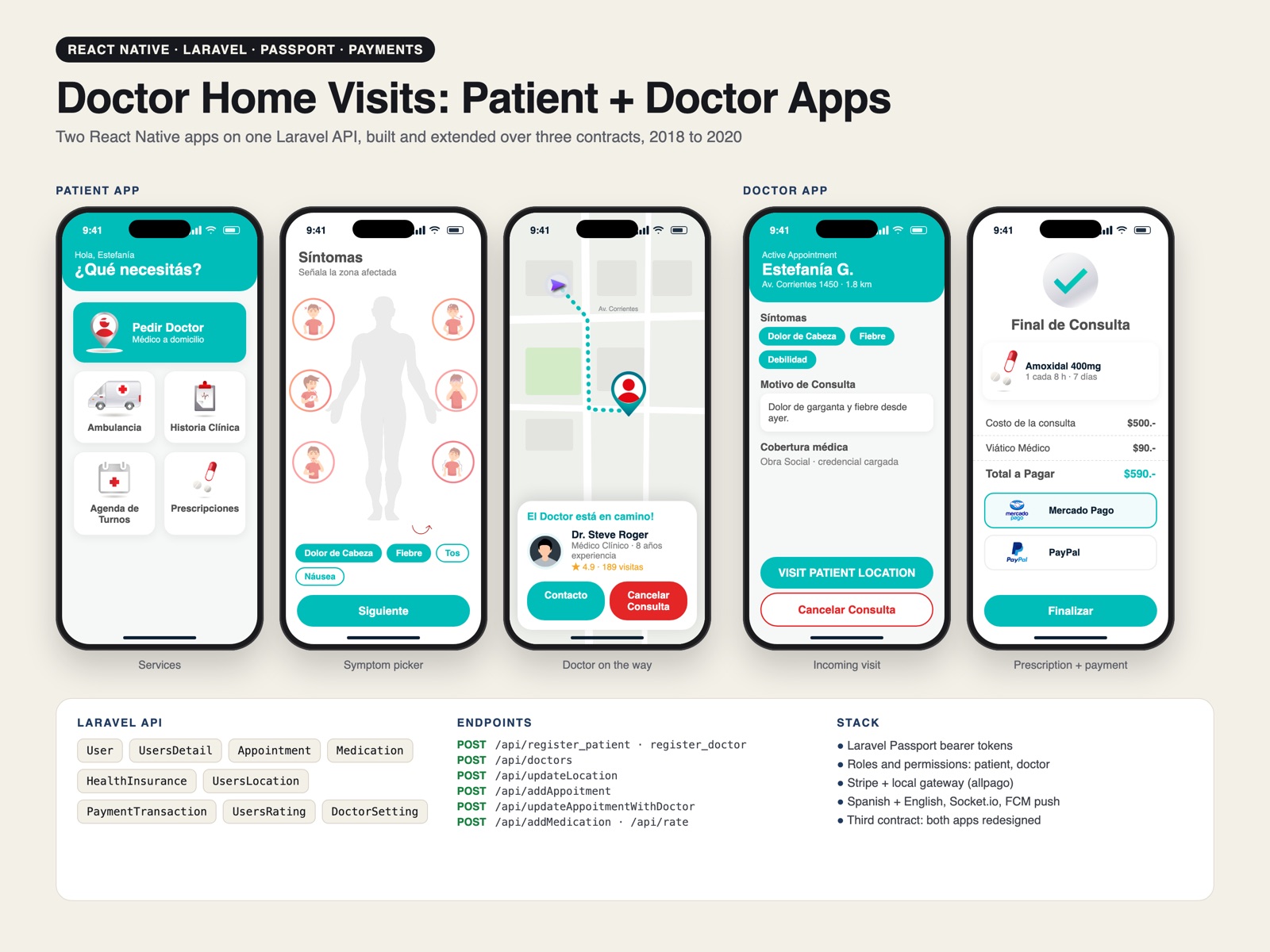
- A Laravel API for a doctor and patient app pair (2018 to 2020, three contracts): appointments, roles and permissions, Laravel Passport authentication, Stripe, an allpago payment gateway integration for the client's market, and a UI and functionality redesign of both apps in the third contract. The mobile clients are React Native.
- Laravel on AWS (2018) for a client who had hired me six times before for FFmpeg and Lambda work: deployment and feature work on their existing Laravel application, delivered in milestones.
- Enterprise PHP (Yii2) with SAP integration for dis-connect.de in Germany (2024 to 2026), PHP talking to enterprise systems where correctness is contractual, alongside AI work there: a facial emotion detection app on Expo and LoRA training pipelines.
Why It Holds Up
The doctor-patient backend is the one I would point a client to. It went through three contracts with the same startup: build, add payments, then redesign both apps on top of the API without breaking what patients were already using. Extending a live system three times is a better test of a backend than building it once.
Message me on the platform where you found this and I will answer there.