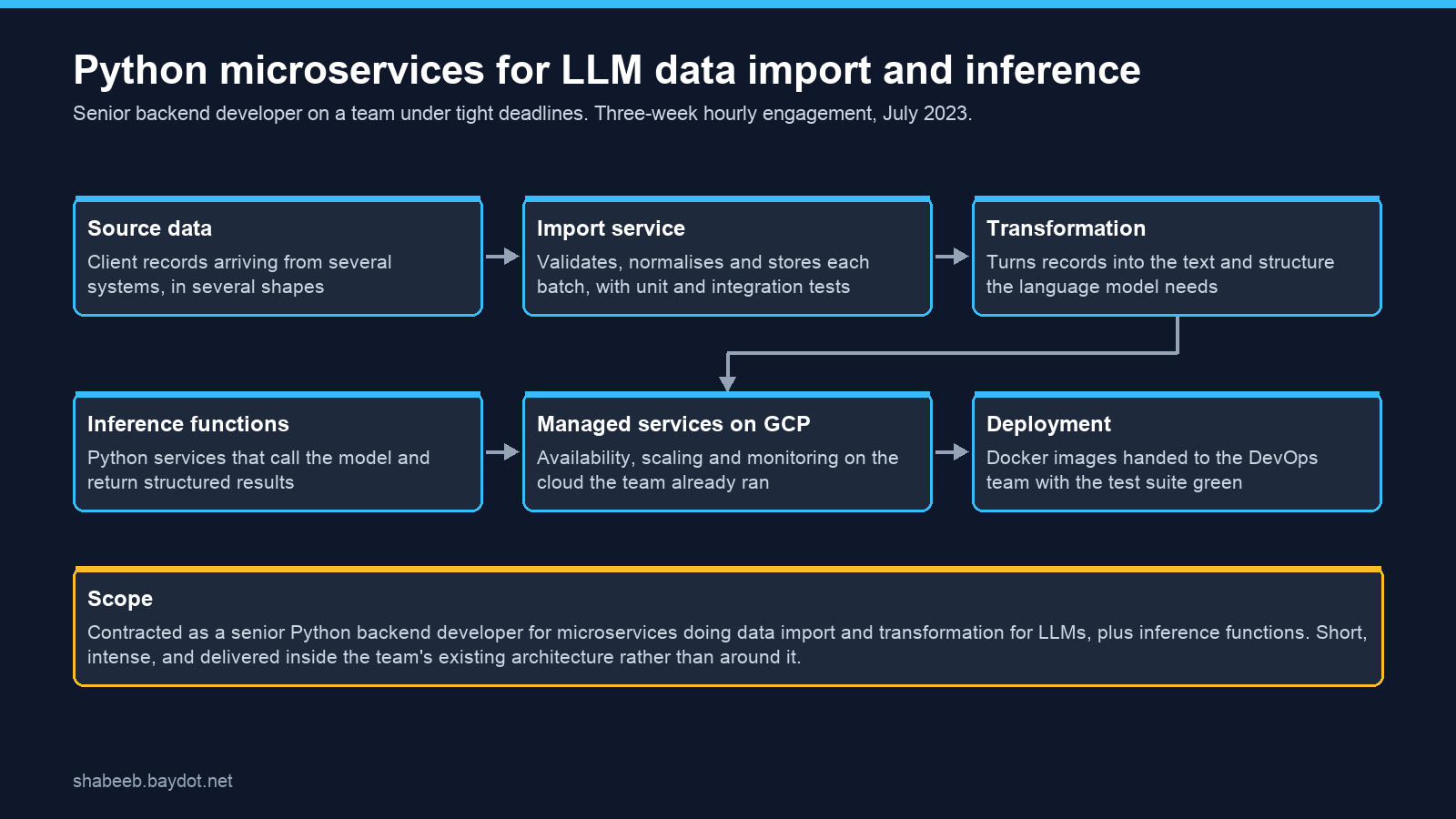
The Brief
A product team working to tight deadlines needed a senior Python backend developer to speed them up. Their system was a set of microservices whose job was to import data from several sources, transform it into the shape a large language model could use, and run inference functions over it. The brief was explicit about what mattered: well-structured code, non-functional requirements met, comprehensive tests, and services that stayed available and scalable on Google Cloud's managed services.
What I Did
- Import and transformation microservices: new functionality in the Python services that pull in records, validate and normalise them, and turn them into the text and structure the model consumes.
- Inference functions: the services that call the model and hand back structured results to the rest of the platform.
- Tests as part of the deliverable: unit, integration and component tests written alongside the code, because the team's deadline left no room for regressions found later.
- Working inside the team's architecture: Docker images and GCP managed services the DevOps and infrastructure teams already ran, so nothing I built needed a new operational path.
Why It Holds Up
Most LLM work in 2023 was prompts. The unglamorous part, getting messy source data into a clean, tested pipeline the model can rely on, is where production systems succeed or fail, and it is the part this engagement was about. It is also why I approach every AI feature from the data side first: if the import is wrong, no prompt fixes it.
Message me on the platform where you found this and I will answer there.